
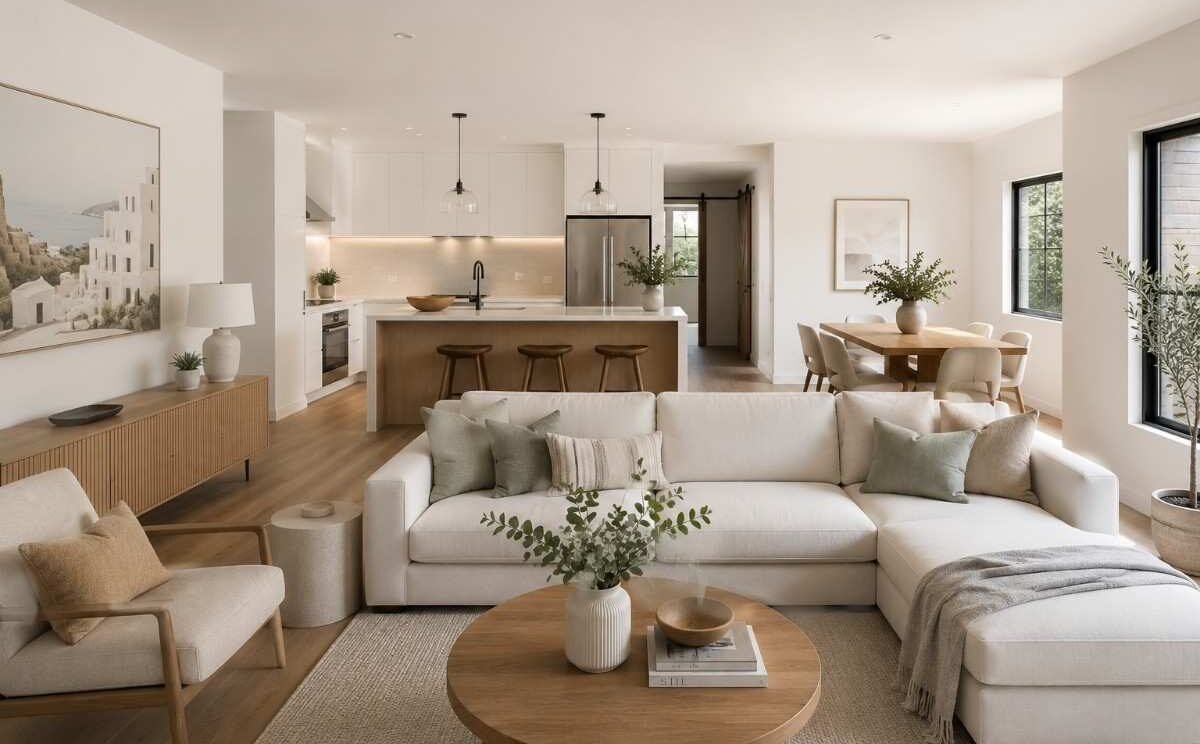
Residential architectural tastes shift continuously, reflecting advancements in technology, changes in lifestyle patterns, and evolving aesthetic preferences. Properties built a few decades ago often carry a distinct spatial and visual language. They are characterized by cellular, segmented rooms, heavy stained-wood trims, and fragmented lighting layouts. While these traditional structures possess a unique charm, they can occasionally feel restrictive, dark, and disconnected from the rhythms of contemporary living.
Transforming an older home into a sleek, modern sanctuary does not necessarily require tearing down the entire structure. Instead, targeted, strategic upgrades can dramatically alter how a property looks, feels, and functions. By prioritizing clean visual lines, open layouts, smart home technology, and advanced lighting systems, property owners can breathe new life into older layouts, boosting daily comfort and long-term asset value.
1. Establishing Architectural Fluidity and Open Layouts
Modern interior architecture revolves around the concept of spatial fluidity. Traditional home blueprints typically utilized walls to isolate the kitchen, dining room, and living area into completely independent zones. While this layout provided privacy, it often made living spaces feel smaller and restricted the penetration of natural light.
Creating a modern feel frequently begins with structural modification to introduce an open-concept layout. Removing non-load-bearing walls between the kitchen and living areas allows spaces to merge seamlessly. This structural openness entirely changes the social dynamic of a home, allowing individuals to prepare meals while remaining fully engaged with family members or guests in the adjacent room.
When walls cannot be removed entirely due to structural constraints, alternative methods can be deployed, such as installing glass partitions, widening existing doorways, or utilizing continuous flooring materials across multiple rooms to make small rooms look bigger and create a unified visual horizon.
2. Transitioning to Clean Lines and Monochromatic Palettes
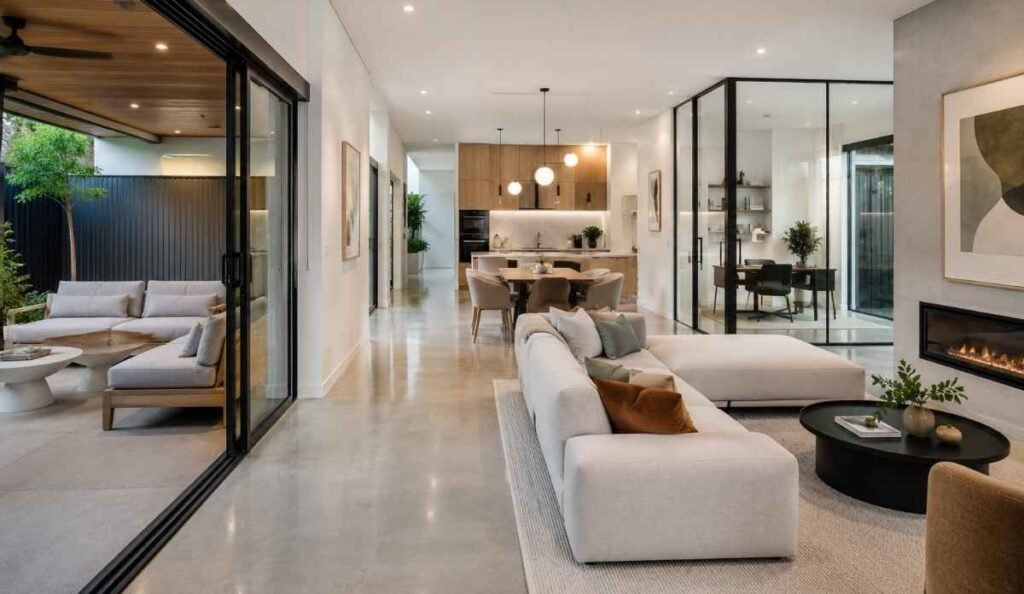
The visual identity of a modern home relies heavily on minimalism and the elimination of unnecessary ornamentation. Intricate crown moldings, textured popcorn ceilings, and heavy, amber-toned wood baseboards instantly date an interior space.
To achieve a modern aesthetic, property owners should focus on simplifying the surfaces. Replacing traditional trim with low-profile, square-edge baseboards creates a crisp, architectural boundary. Scraping textured ceilings to achieve a perfectly smooth, flat finish allows light to bounce cleanly across the room without creating jagged shadows. Furthermore, modern color theory favors neutral, monochromatic, or desaturated palettes.
Coating walls in crisp whites, subtle grays, or deep charcoal tones establishes a sophisticated, clean backdrop. This design strategy allows the architectural features of the building and curated furniture pieces to serve as the primary visual anchors.
3. Integrating Hidden Smart Automation Systems
A home cannot truly feel modern if its underlying operational mechanics remain tethered to outdated infrastructure. Modern living demands intuitive, seamless interaction with our physical environments. Integrating smart home improvements and automation projects is no longer a futuristic luxury. It is a foundational baseline for contemporary property updates.
Upgrading to a connected environment involves installing smart thermostats that learn occupancy patterns, motorized window treatments that adjust based on the position of the sun, and keyless biometric entry systems. Incorporating these advanced systems smoothly into a property portfolio requires careful planning and coordination. For landlords looking to optimize their real estate investments, deploying smart tech and contemporary finishes serves as a powerful tool to attract premium residents.
Working with specialized teams in residential property management in Salt Lake City allows property owners to safely update their units with high-demand amenities, ensuring that smart locks, energy-efficient climates, and modernized finishes are managed properly and remain fully operational across all leasing cycles.
4. Layered Architectural Lighting and Contemporary Fixtures
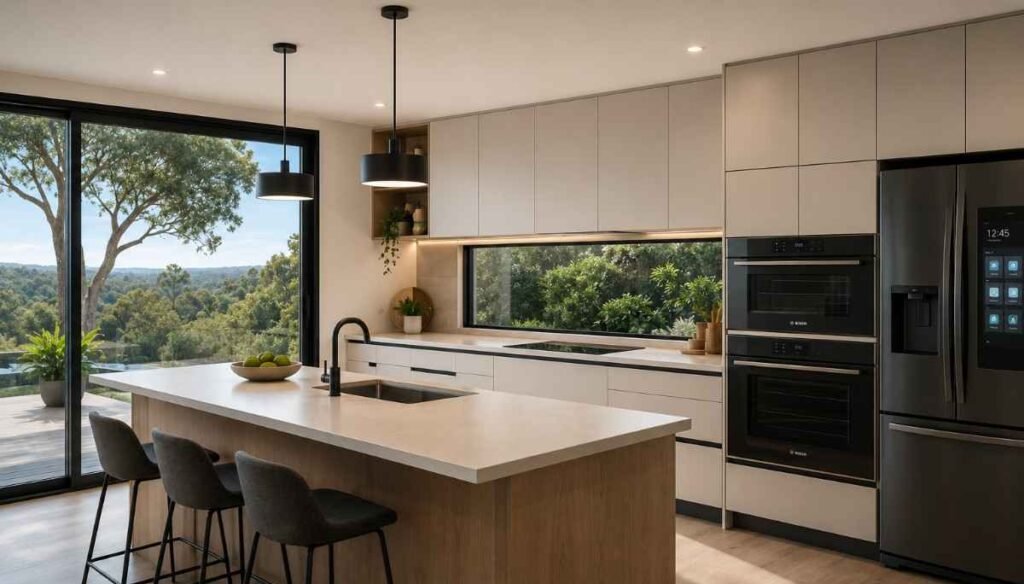
Lighting is arguably the most powerful tool in an interior designer’s arsenal, yet it is often the most overlooked. Older properties frequently rely on a single, centralized flush-mount fixture in the middle of a room, which casts harsh shadows and leaves corners completely dark.
A modern lighting strategy uses a layered approach that combines ambient, task, and accent lighting. Installing dimmable, flush-mounted LED recessed lighting across the ceiling establishes a clean, even baseline of illumination without cluttering the visual field and better indoor comfort. This ambient layer should be supplemented with targeted task lighting, such as under-cabinet LED strips in the kitchen or sleek reading sconces in the bedroom.
Finally, replacing outdated chandeliers with architectural, geometric pendants made from matte black steel, brushed brass, or blown glass instantly elevates the room, turning a functional light source into a striking piece of sculptural art.
Conclusion
Making a home feel modern is a deliberate exercise in simplification, illumination, and technological integration. By systematically removing physical barriers to open up workflows. Stripping away outdated ornamentation, layering advanced architectural lighting, and embedding smart home networks into the infrastructure, you strip away the age of a structure. The result is a highly functional, visually serene environment engineered to complement the dynamics of modern life.