
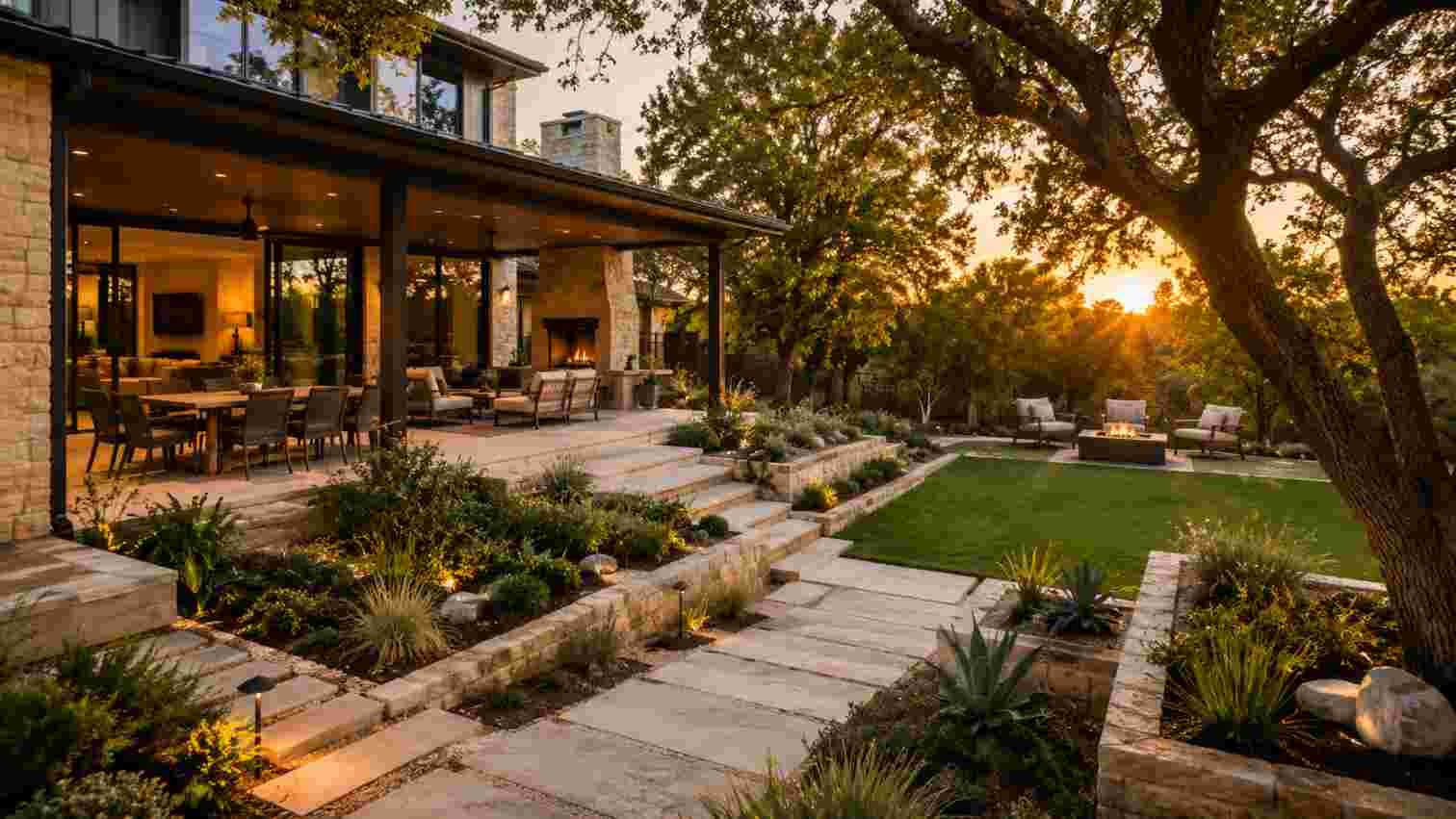
A well-designed outdoor space should do more than look polished from the back door. It should make daily life easier, support the way people actually gather, and work with the site instead of against it. That is the real difference between decorative landscaping and thoughtful landscape design that Austin homeowners can live with year after year.
For Southern Landscape, usability is not an afterthought. It is the starting point. The best outdoor living areas are shaped by circulation, shade, seating, drainage, planting structure, and maintenance expectations.
When those elements are handled well, the result feels natural, comfortable, and practical without losing visual appeal.
Start With How the Space Will Be Used, Not How It Will Look
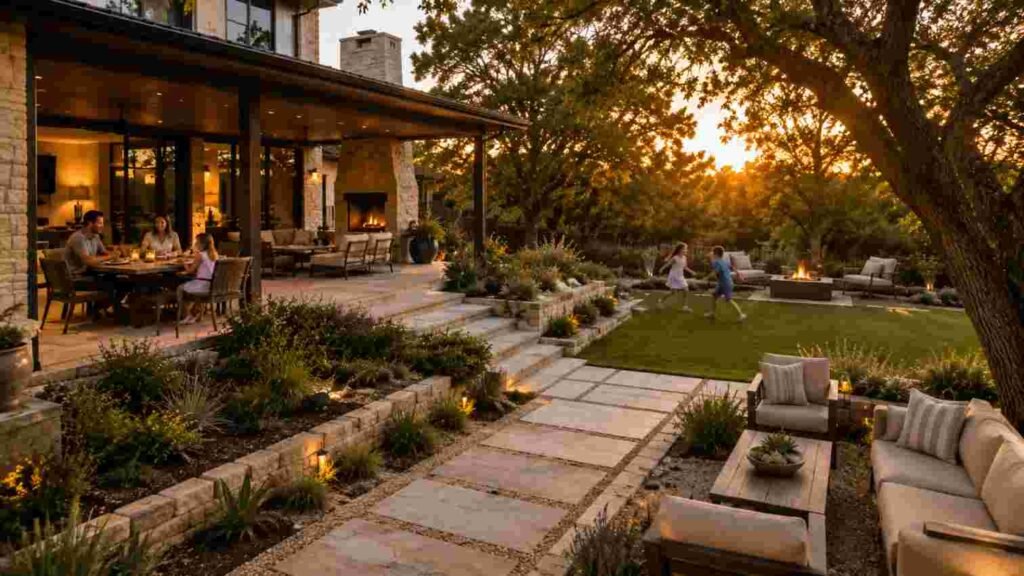
Too many outdoor projects begin with style references and end with compromised function. A space can be beautiful and still be frustrating if the layout ignores how people move through it. Before choosing materials or plants, strong design asks a more basic question: what should this area actually do?
That answer changes the entire plan. A family that hosts weekend dinners needs different zoning than a homeowner who wants a quiet reading nook, a play area, and a path to the garden. Southern Landscape approaches this through a master plan, which helps connect the visual concept to real-world use. That is where the design starts earning its keep.
Separate Activity Zones Without Making the Yard Feel Chopped Up
Usable outdoor living areas usually work best when they are organized into clear but connected zones. A dining area, fire feature, lounge space, and planting bed can each have a purpose without feeling isolated. The trick is to create definition through grade changes, paving patterns, planting structure, and furniture placement rather than by overbuilding walls or dividing the yard too aggressively.
This matters especially in smaller Austin yards, where every square foot has to do more. Southern Landscape often uses custom design-build planning to make the site feel larger and more flexible. A strong layout can make a compact yard support multiple functions without visual clutter.
Build Movement Into the Plan
Circulation is one of the most overlooked parts of outdoor design. People should be able to move easily from the house to seating, from seating to a grill, or from one side of the property to another without cutting across awkward corners. Clear paths improve safety, reduce wear on lawn areas, and make the space feel intentional.
Well-placed walkways also help separate “active” and “quiet” uses. That can be as simple as a direct route between doors and gathering areas, with secondary paths leading to gardens or side yards. In practice, this creates a more comfortable rhythm across the property.
Design for Comfort First: Shade, Seating, and Microclimate Matter More Than Decoration
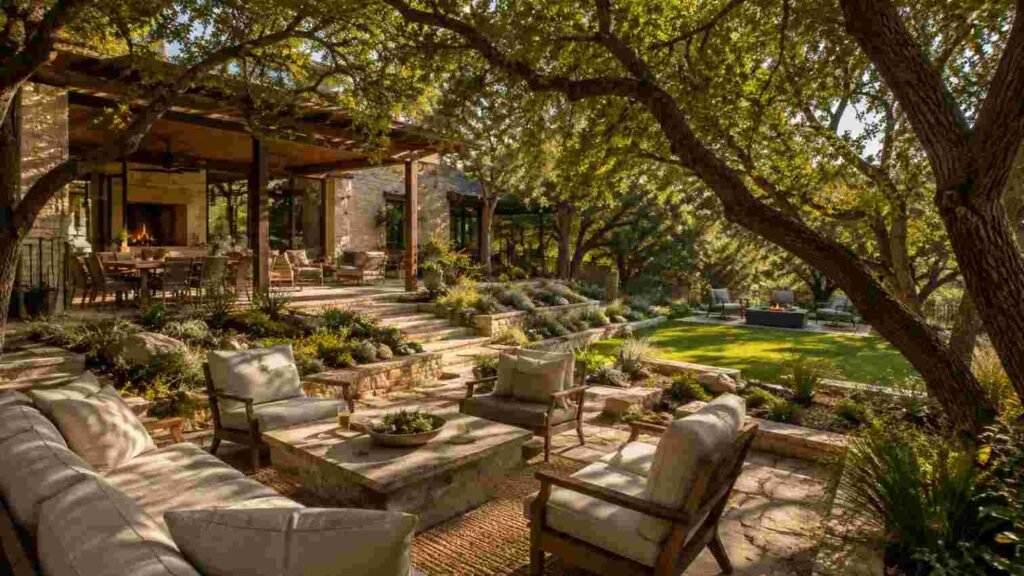
An outdoor area only becomes truly usable when people want to stay there. In Central Texas, comfort depends heavily on managing heat, glare, wind, and exposure. That is why experienced landscape design in Austin puts so much emphasis on microclimate, not just aesthetics.
Understanding the principles of landscape design can help homeowners make better decisions about shade, seating, circulation, planting, and material selection.
A patio with no shade may look complete in renderings but rarely gets used in July. A seating area placed in harsh afternoon sun may become dead space, no matter how attractive the pavers are. Southern Landscape accounts for these realities by pairing structural planning with horticultural insight.
Good comfort design usually includes a combination of the following:
- Shade structures that reduce direct sun during peak heat
- Tree placement that matures into meaningful cover
- Seating arranged for conversation and views, not just symmetry
- Materials that do not feel overly harsh or visually hot
- Transitional spaces that soften the move from indoors to outdoors
Each of these choices improves the daily experience of the space. Together, they make the difference between a yard people admire and a yard people use.
Use Planting as Functional Architecture
Planting beds should do more than fill empty edges. In a well-planned landscape, they shape movement, frame views, block unwanted exposure, and help scale the property. Native, drought-tolerant, and deer-resistant Texas plants can be especially valuable because they support usability without demanding constant intervention.
Southern Landscape integrates Texas horticulture into the design process, which matters because the plant palette affects everything from privacy to long-term maintenance. The right planting plan can cool a sitting area, soften hardscape edges, and make a yard feel settled rather than newly installed.
Choose Materials That Support Real Use
Outdoor surfaces need to handle traffic, weather, and maintenance without becoming a burden. That means choosing materials with the intended use in mind. A dining terrace, for instance, needs stable footing for chairs and traffic flow. A transition path may need different proportions or texture than a main entertaining patio.
A play area may need softer edges or a different layout entirely. Projects such as yard landscaping with landscape rock can also add structure and improve the functionality of different outdoor areas.
A play area may need softer edges or a different layout entirely.
A design that respects use will always age better than one built around visual trends alone.
Make the Infrastructure Invisible, Because That Is What Keeps the Space Usable
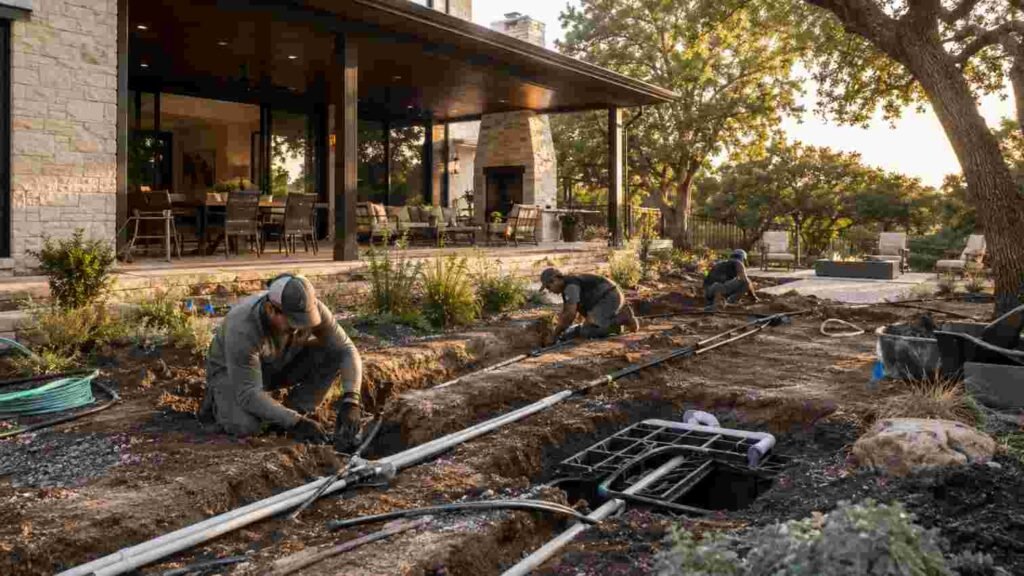
The best outdoor living areas feel effortless because the technical work happens below the surface. Drainage, grading, soil preparation, and irrigation are not flashy features, but they are often what determines whether a landscape stays functional. If water pools near a patio, soil stays compacted, or irrigation is poorly calibrated, the whole space becomes harder to enjoy.
Southern Landscape stands out because it treats these structural issues as part of the design, not as cleanup work after the fact. That approach is especially important in Austin, where clay and limestone soils can complicate installation and long-term performance.
These same planning principles can also support home durability in severe weather, especially when outdoor drainage, grading, and structural features are designed to handle demanding conditions.
A usable outdoor living area usually depends on these behind-the-scenes decisions:
- Proper grading to move water away from key use zones
- Soil preparation that supports healthy root growth
- Irrigation planning that matches plant needs and site conditions
- Drainage solutions that protect hardscape and planting beds
- Access to serviceable systems that can be adjusted over time
These details rarely show up first in a photo, but they strongly affect whether the space remains attractive and practical after a few seasons.
Smart Irrigation Supports Long-Term Use
In Austin, a landscape that depends on frequent hand watering is less reliable and more expensive to maintain. Smart irrigation and drip irrigation help match water delivery to plant needs more precisely, which supports healthier growth and better efficiency. That becomes even more valuable during Stage 1 and Stage 2 watering restrictions, when a rigid, high-water landscape can become difficult to maintain.
The goal is not simply to reduce water use. The goal is to keep the space looking composed and functioning well under real conditions.
Plan for Flexibility, Because Outdoor Needs Change Over Time
A good outdoor living area should not only solve today’s needs. It should also leave room for better outdoor space upgrades as the household’s needs and priorities change over time.
It should leave room for the way a family, household, or property may evolve. That is where phased design becomes strategically valuable. Instead of trying to finish everything at once, a master plan can establish the full vision while allowing the work to happen in stages.
This is especially practical when a project has to balance budget, urgency, and long-term ambition. Southern Landscape works on master-planned design projects ranging from $10,000 to over $1,000,000, which reflects how different a “complete” outdoor environment can be from one property to the next. The important point is not the size of the budget. It is the clarity of the plan.
Phased Work Preserves Coherence
One of the biggest risks in incremental landscaping is ending up with disconnected additions. A patio is installed one year, a shade structure appears later, and then planting gets patched in with no unifying logic. A master plan prevents that. It gives each phase a place in the larger composition so the property feels coherent as it evolves.
That is one reason Southern Landscape’s design-build process is valuable. The initial concept can guide future work without forcing the owner into a single all-at-once buildout.
Local Experience Helps Avoid Expensive Rework
Austin properties often present specific constraints: soil conditions, permitting, HOA approvals, grading issues, and changing expectations around water use. A team with deep local experience can anticipate those realities earlier, which helps prevent rework and design compromises later. Southern Landscape has over 40 years of local experience, and that kind of familiarity matters when usability is the standard.
A beautiful plan that ignores local conditions is often a short-lived one.
What Strong Outdoor Design Actually Delivers
The best outdoor environments do not feel overdesigned. They feel clear, comfortable, and ready for use. They make it easy to host people, spend time outside, and maintain the property without constant friction. They also age more gracefully because they were built around the site’s realities instead of a surface-level trend.
Southern Landscape brings that perspective into its landscape design services in Austin, combining design expertise, horticultural judgment, and construction planning in one process. That integrated approach is what turns a pretty yard into a genuinely usable outdoor living area.
The long-term takeaway is simple: usability is not a separate goal from design. It is the measure of whether the design was any good in the first place. When the layout, infrastructure, plant selection, and comfort features all work together, the result is an outdoor space people actually use, not just admire from inside.