

Getting your driver’s license is a massive milestone. Holding those keys for the first time brings a rush of freedom and independence. You can finally go where you want, when you want, without asking a parent or older sibling for a ride.
Essential Pre-Drive Checks
Jumping in the car and immediately turning the key is a bad habit. Taking a minute to prepare your vehicle ensures you have maximum visibility and control.
Adjusting Your Mirrors and Seat

Your seating position dictates how well you can steer and brake in an emergency. Move your seat forward or backward so your foot can press the brake pedal all the way to the floor without locking your knee. Your arms should have a slight bend when holding the steering wheel. Next, adjust your rearview and side mirrors. You want to see the road behind you clearly while minimizing blind spots on the sides of your car.
Understanding Dashboard Warning Lights
Modern cars communicate through the dashboard. A blue or green light usually indicates a system is on, like your headlights. A yellow or orange light means something needs attention soon, such as a check engine warning or low tire pressure. A red light is an urgent warning. If you see a red oil can or battery symbol, pull over safely and turn off the engine immediately to prevent severe damage.
Mastering the Rules of the Road
Knowing how to operate the car is only half the battle. You also need to know how to interact with other drivers, pedestrians, and cyclists safely.
Right-of-Way and Traffic Laws
Intersections can be highly confusing for beginners. The basic rule of a four-way stop is that the first vehicle to arrive has the right of way. If two cars arrive at the same time, the car on the right goes first. Local laws can vary slightly depending on your state, so reviewing your local driver’s handbook is always a smart move. Some new drivers even choose to take a defensive driving class in Utah to get hands-on experience with complex traffic scenarios.
Reading Road Signs
Traffic signs use shapes and colors to communicate messages quickly. Octagons always mean stop, while inverted triangles mean yield. Yellow diamond signs serve as warnings for upcoming hazards like sharp curves or pedestrian crossings. Paying close attention to these signs gives you the extra seconds needed to adjust your speed safely.
Defensive Driving Techniques
You cannot control what other drivers do. You can only control your reaction to them. Defensive driving means anticipating danger before it happens.
Maintaining a Safe Following Distance

Rear-end collisions are incredibly common among new drivers. To avoid this, use the three-second rule. Pick a stationary object on the side of the road, like a tree or a sign. When the car in front of you passes, start counting. If you pass that same object before you reach three seconds, you are following too closely. Increase this distance to five or six seconds during rain or heavy traffic.
Scanning for Hazards
Many beginners suffer from tunnel vision. They stare directly at the bumper of the car in front of them. Instead, keep your eyes moving. Look a quarter-mile down the road to spot brake lights, lane closures, or erratic drivers early. Check your mirrors every few seconds so you always know what is happening in your blind spots.
Handling Adverse Conditions
Sunny, clear days make for easy driving. However, you need to be prepared for when the environment works against you.
Navigating Rain and Bad Weather
Rain mixes with oil on the asphalt to create a slick, dangerous surface, especially during the first few minutes of a storm. Slow down immediately when it starts raining. Turn on your headlights so other drivers can see you, and avoid braking aggressively. If your car starts to hydroplane, take your foot off the gas and steer smoothly in the direction you want to go. Do not slam on the brakes.
Driving at Night and in Heavy Traffic
Visibility drops significantly after the sun goes down. Dim your dashboard lights to reduce glare inside the cabin, and never look directly at the headlights of oncoming traffic. Look toward the lower right side of your lane to maintain your position. During heavy rush-hour traffic, stay patient. Keep a steady speed rather than constantly accelerating and braking, and always use your turn signals well before changing lanes.
Basic Vehicle Maintenance
Taking care of your car prevents breakdowns and keeps you safe. You do not need to be a mechanic to perform basic upkeep.
Checking Tire Pressure
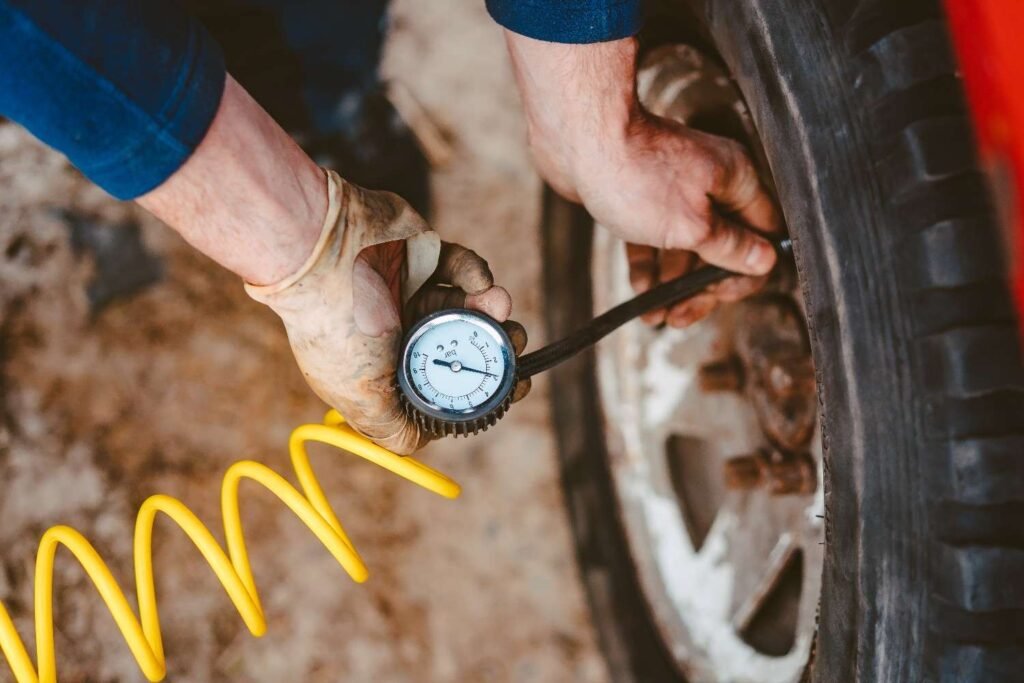
Tires are your only contact with the road. Underinflated tires reduce fuel efficiency and make the car harder to steer. Overinflated tires are prone to popping. Buy a cheap digital tire pressure gauge and keep it in your glove box. Check your tire pressure once a month when the tires are cold. You can find the correct pressure levels printed on a sticker inside the driver’s side door jamb.
Topping Up Essential Fluids
Your engine relies on fluids to run smoothly. Pop the hood once a month and check your oil dipstick. If the oil is below the minimum line, add a little bit at a time until it reaches the correct level. You should also check your windshield washer fluid reservoir. Running out of washer fluid on a muddy road can completely blind you, so keep a spare jug in your trunk.
Conclusion
Learning to drive takes time and practice. Every time you get behind the wheel, you gain valuable experience that makes you a safer, more capable driver. By performing your pre-drive checks, practicing defensive driving, and maintaining your vehicle, you significantly lower your risk of accidents.
Additionally, maintaining responsible driving habits not only keeps you safe but also promotes a healthier road environment for everyone. Grab your keys, buckle up, and focus on the road ahead. Your driving journey starts now.