

In every legal system, evidence serves as the backbone of justice. Without credible proof, courts may decide civil or criminal cases based on speculation rather than fact. Evidence supports claims, uncovers the truth, and ensures the court delivers justice properly. Anyone involved in legal proceedings must understand how evidence works, the different types of evidence, and its role in court.
The Role of Evidence in Court
Evidence provides the factual basis that allows judges and juries to reach informed decisions. It acts as a bridge between allegations and truth, helping the court determine what likely happened. Without evidence, legal arguments would be nothing more than opinions or accusations, which is why courts place significant emphasis on admissibility and reliability.
In criminal cases, evidence can mean the difference between conviction and acquittal. Prosecutors rely on strong evidence to prove guilt beyond a reasonable doubt, while defense attorneys use evidence to protect the accused and highlight inconsistencies in the prosecution’s claims. In civil cases, evidence supports claims for damages, contracts, and liability, guiding the court toward fair resolutions.
Types of Evidence
Evidence can take many forms, each with unique characteristics and rules for presentation in court:
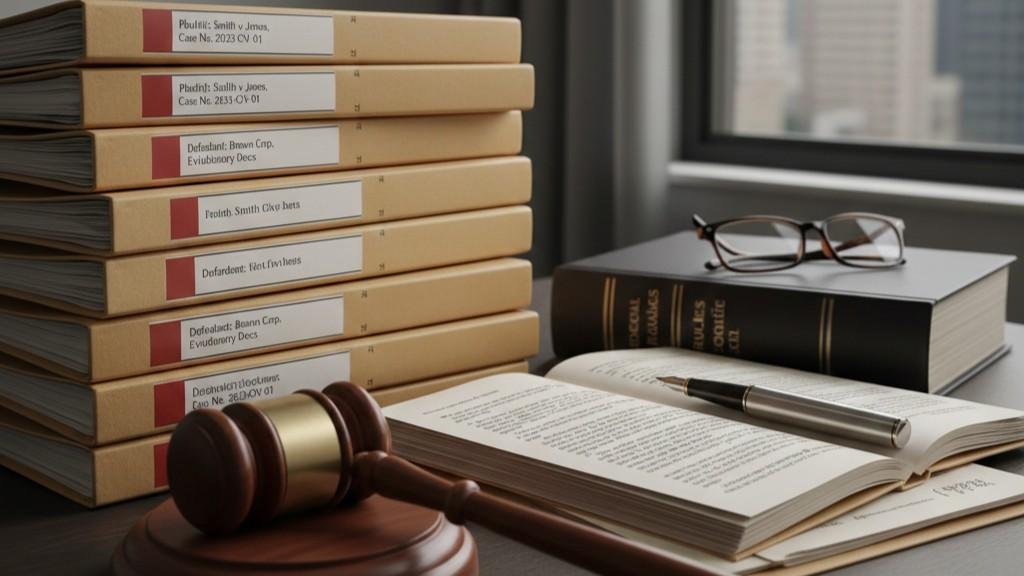
- Direct Evidence: This type of evidence directly proves a fact without requiring inference. Examples include eyewitness testimony, a signed contract, or video recordings of an event.
- Circumstantial Evidence: Unlike direct evidence, circumstantial evidence requires interpretation and inference. It might include fingerprints, DNA, or behavioral patterns that suggest a particular conclusion.
- Documentary Evidence: Written or recorded documents such as emails, contracts, medical records, and financial statements fall into this category. Proper authentication is critical for such evidence to be accepted.
- Physical Evidence: Tangible items, from weapons to clothing or stolen property, are analyzed to support claims and link parties to incidents.
- Digital and Electronic Evidence: With the rise of technology, electronic evidence—like emails, text messages, or security camera footage—has become increasingly important. Proper collection and preservation of digital evidence ensure its credibility in court.
The Importance of Proper Evidence Handling
The way evidence is collected, stored, and presented can significantly impact a case’s outcome. Mishandled evidence can be challenged, potentially leading to its exclusion and weakening a case. For instance, maintaining the chain of custody ensures that the evidence presented in court is exactly the same as when it was initially collected, free from tampering or contamination.

This is where specialized services, such as legal videography in Fort Lauderdale, play a crucial role. High-quality video recordings of depositions, crime scenes, or accident reconstructions provide clear, admissible visual evidence that can strengthen a case. Professionals trained in legal videography understand the strict standards required for court admissibility, ensuring that video evidence remains reliable and impactful.
How Evidence Influences Justice
The influence of evidence on justice cannot be overstated. Reliable evidence helps prevent wrongful convictions and supports fair outcomes by giving the court a factual foundation to evaluate claims. Conversely, weak or fraudulent evidence can lead to miscarriages of justice, highlighting the need for rigorous standards in evidence collection and verification.
Evidence also serves a broader societal purpose: it reinforces trust in the legal system. When courts base decisions on verified facts rather than assumptions, the public can have confidence that justice is impartial and objective. Transparent handling of evidence, including proper documentation and expert testimony, helps uphold the rule of law and ensures accountability for all parties involved.
Conclusion
In legal proceedings, evidence is more than just proof—it is the cornerstone of justice. From eyewitness accounts to digital records, the careful collection, handling. Presentation of evidence determine the fairness and accuracy of court decisions. By recognizing the importance of evidence and utilizing professional services. Such as legal videography in Fort Lauderdale, attorneys and individuals alike can help ensure that justice is not only pursued but achieved.
The next time you think of a courtroom, remember that evidence is what transforms opinions into facts, speculation into certainty, and allegations into truth. In the pursuit of justice, evidence is the ultimate guide.