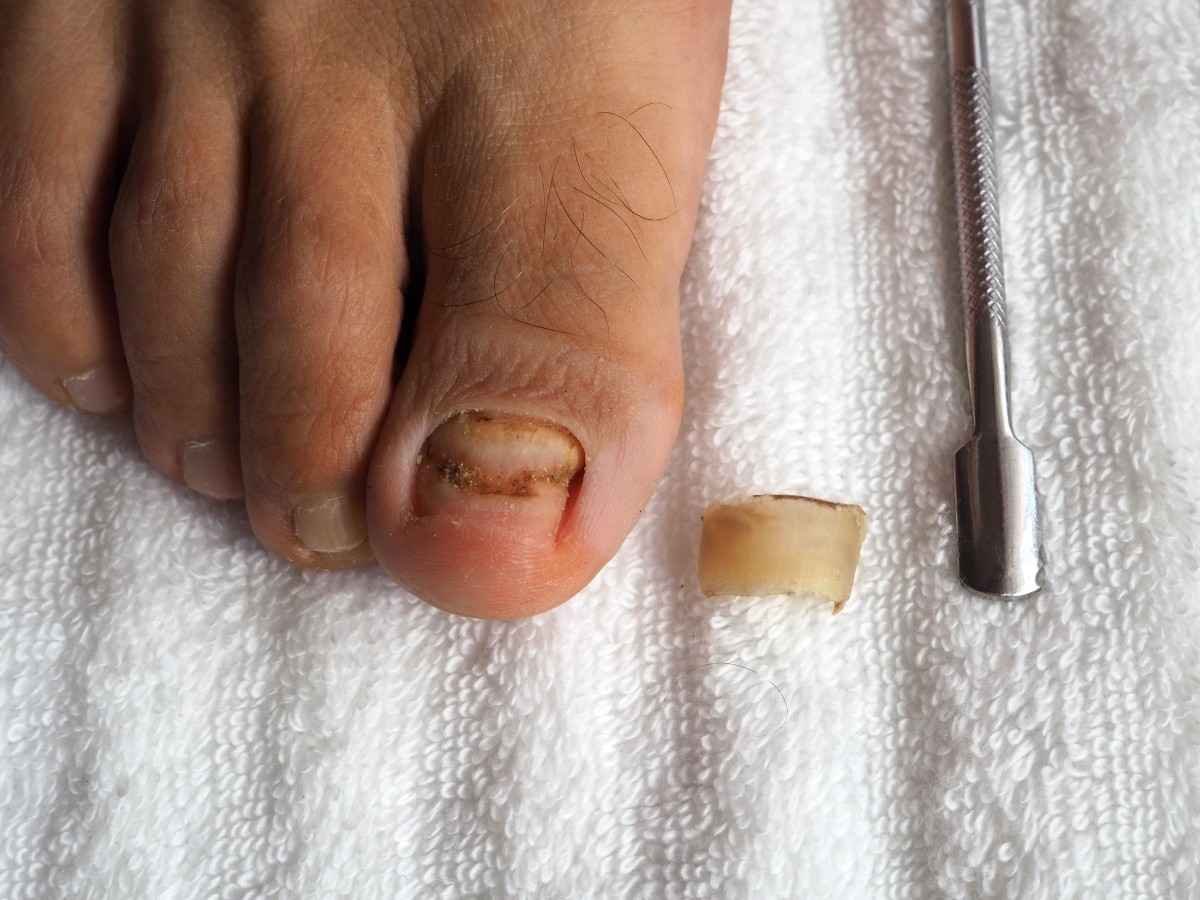
Let’s talk about something that nobody really knows about how to deal with ingrown toenail self-care. We’ve all been there, right? You spot a little redness near your toenail, and at first, it’s not so bad. But then, it starts to ache. And before you know it, you’re limping like you’re trying to escape from a bad date.
Trust me, I’ve been in your shoes (pun intended). But here’s the good news: ingrown toenail self-care can be simple and effective, and you can totally manage it at home. Let’s dive into how you can soothe that throbbing toe and get back to walking comfortably.
Immediate Self-Care Steps
If you catch the ingrown toenail early, you can usually handle it without a visit to the doctor. Here’s how to take care of it:

Soak the Toe
Start by soaking your foot in warm, soapy water or an Epsom salt solution for 15–20 minutes, 3 to 4 times a day. The warmth helps soften the skin and nail, making it easier to work with. This is a great way to reduce swelling and ease the pain.
Separate the Nail
After soaking, gently massage the skin fold away from the ingrown edge. Some experts recommend placing a small piece of clean, wet cotton or waxed dental floss under the edge of the nail. This helps the nail grow above the skin. Be gentle! Don’t force it just let the cotton do its thing. Change it daily to avoid infection.
Apply Ointment
To prevent infection, apply an over-the-counter antibiotic or antiseptic ointment like Neosporin or Polysporin to the affected area. Cover it with a loose bandage to keep the area clean and dry.
Manage Pain
Over-the-counter pain relievers, such as ibuprofen or acetaminophen, can help reduce inflammation and discomfort. Follow the recommended dosage to keep the pain manageable.
Choose Proper Footwear
Until the toe heals, wear open-toed shoes or sandals to reduce pressure. If closed shoes are a must, make sure they have a wide toe box so they don’t press on the ingrown toenail.
What to Avoid
While you’re focusing on ingrown toenail self-care, there are definitely some things to avoid to prevent the problem from worsening:
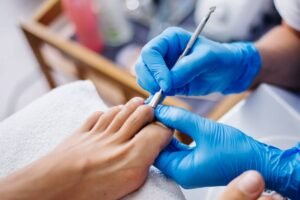
“Bathroom Surgery”
Resist the temptation to do any “bathroom surgery”. Don’t dig at the ingrown nail with sharp objects like needles or scissors. This increases the risk of infection and can make the situation a lot worse.
Cutting Too Short
Never cut your toenails too short or round the edges. This encourages the nail to grow back into the skin causing another ingrown toenail. Keep the trim straight across and at a moderate length even with the tip of your toe.
When to See a Doctor
While many ingrown toenails can be treated at home, there are situations where you should consult a doctor immediately.

Signs of Infection
If you experience increased redness, throbbing pain, swelling, pus, or a foul odor, it’s time to see a doctor. These could be signs of an infection that needs professional care.
Underlying Conditions
If you have diabetes, poor circulation (peripheral arterial disease), or nerve damage in your feet, you should not attempt self-care. Seek medical advice right away to avoid complications.
No Improvement
If your ingrown toenail doesn’t improve with home treatment or keeps recurring, it’s time to see a podiatrist. They may need to remove part of the nail or perform another procedure.
Prevention of Ingrown Toenails
It’s much easier to prevent ingrown toenails than to treat them. Here’s how to keep your toes happy and healthy:

Trim Correctly
Always trim your toenails straight across. Don’t cut them too short or into a curved shape. This gives the nail room to grow properly and reduces the chance of it growing into the skin.
Check Fit
Make sure your shoes and socks aren’t too tight. Tight footwear puts pressure on your toes, which can lead to ingrown toenails. Opt for shoes with a wide toe box to give your toes plenty of room.
Foot Hygiene
Keeping your feet clean and dry is essential for preventing infection. Make sure you dry your feet thoroughly after showers and apply foot powder if needed to keep them fresh.
Frequently Answered Questions
1. Can I still walk with an ingrown toenail?
Yes, but it may be uncomfortable. If your ingrown toenail is causing mild pain, you can still walk. Just avoid tight shoes or anything that puts pressure on the affected toe. Opt for flip-flops or sandals until the pain subsides.
2. How long does it take for an ingrown toenail to heal?
With proper care, an ingrown toenail can heal in a few days to a week. However, if the infection is severe or the toenail doesn’t improve with home treatment, it may take longer. Be patient and continue with the soaking and ointment until it improves.
3. Should I try to fix the ingrown toenail myself?
While soaking and gently separating the nail is okay, don’t try to dig it out yourself. This can lead to further injury and infection. If you’re unsure or if symptoms worsen, it’s better to consult a doctor.
4. When should I see a doctor for an ingrown toenail?
If you notice signs of infection (redness, swelling, pus), or if your ingrown toenail isn’t improving with home care, it’s time to see a doctor. This is especially important if you have diabetes or other underlying conditions that may complicate healing.
Toe-tally Simple Ingrown Toenail Self-Care
And there you have it! Ingrown toenail self-care doesn’t have to be a huge hassle. With the right steps, you can take care of that annoying toe right at home. Soak it, apply ointment, wear the right shoes, and avoid cutting too short—and you’ll be back to walking pain-free in no time.
Make a habit of trimming your toenails straight across and at a moderate length to avoid future problems. It only takes a few minutes and can save you a lot of trouble in the long run.
Medical Disclaimer: This blog is for informational purposes only. For medical advice or diagnosis, always consult a professional.