

Unplanned downtime in industrial facilities costs manufacturers an estimated $50 billion per year, according to Deloitte. Behind most of those losses? Inadequate maintenance.
Whether you’re managing a chemical plant, a water treatment facility, or a manufacturing operation, having the right maintenance systems in place isn’t just a best practice—it’s a business necessity. Here are six maintenance systems that keep plants operating at peak performance.
1. Preventive Maintenance (PM)
Preventive maintenance is the foundation of any well-run plant. Rather than waiting for equipment to fail, PM schedules routine inspections, lubrication, calibration, and part replacements at regular intervals. The goal is straightforward: catch problems before they become costly breakdowns.
A well-executed PM program can reduce equipment downtime by up to 30%, according to the U.S. Department of Energy. The key is consistency—tasks need to be logged, tracked, and completed on schedule. Most facilities use a Computerized Maintenance Management System (CMMS) to manage this workload efficiently.
2. Predictive Maintenance (PdM)
Where preventive maintenance works on a fixed schedule, predictive maintenance relies on real-time data to determine when equipment actually needs attention. Sensors and monitoring tools track variables like vibration, temperature, pressure, and acoustic emissions to detect early signs of wear or failure.
Studies suggest that predictive maintenance can reduce maintenance costs by 25–30% compared to reactive approaches. It’s particularly effective for rotating equipment—pumps, compressors, and motors—where subtle changes in performance often signal an impending issue long before a breakdown occurs.
3. Reliability-Centered Maintenance (RCM)
Reliability-Centered Maintenance is a more strategic, system-level approach. Rather than applying the same maintenance logic to all equipment, RCM analyzes each asset’s function, failure modes, and the consequences of those failures. The result is a customized maintenance plan that prioritizes resources where they matter most.
Industries like aviation, oil and gas, and nuclear power have used RCM for decades to maintain safety and operational reliability. For plant managers dealing with complex systems and tight budgets, it offers a structured way to decide what to maintain, how to maintain it, and how often.
4. Valve and Flow Control Maintenance
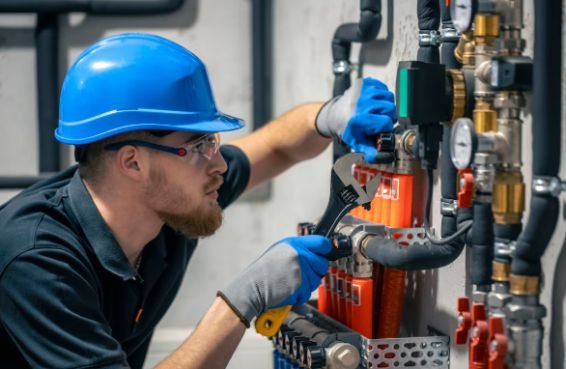
Valves are among the most critical—and most frequently overlooked—components in any plant. They control the flow of gases, liquids, and steam throughout a facility, and when they fail, the consequences can range from minor inefficiencies to serious safety incidents.
A dedicated valve maintenance program includes regular inspection for leaks and corrosion, actuator testing, and replacement of worn seats and seals.
Facilities that source quality industrial pipe valves in Utah and pair them with a structured maintenance protocol significantly reduce the risk of unplanned shutdowns. Keeping detailed records of valve performance over time also helps identify recurring issues before they escalate.
5. Lubrication Management

Improper lubrication is responsible for an estimated 70% of all bearing failures in industrial equipment. Despite this, lubrication is often treated as a low-priority task rather than a specialized discipline.
An effective lubrication management system defines the right lubricant for each application, the correct quantity, and the appropriate interval.
It also accounts for contamination control—keeping lubricants clean and dry is just as important as applying them on schedule. Many plants are now adopting automated lubrication systems that deliver precise amounts of lubricant to equipment during operation, reducing both human error and labor costs.
6. Shutdown and Turnaround Maintenance
Even the best day-to-day maintenance programs require periodic shutdowns for more intensive work. Turnaround maintenance (TAM) involves taking a plant or unit offline to perform inspections, overhauls, and replacements that can’t be done during normal operation.
Turnarounds are expensive and disruptive, which makes planning everything. A well-organized shutdown plan outlines every task, assigns responsibilities, coordinates contractors, and sets a firm timeline for return to service.
Plants that invest in detailed pre-shutdown planning consistently complete turnarounds faster and at lower cost than those that don’t. Post-turnaround reviews are equally important—capturing lessons learned helps streamline the next cycle.
Keeping It All Together
No single maintenance system covers every need. The most resilient plants layer multiple approaches—using preventive schedules as a baseline, predictive tools to catch emerging issues, and specialized programs for critical components like valves and bearings.
When these systems work together, the result is fewer surprises, lower costs, and a safer working environment for everyone on the floor. This kind of efficiency is also a key driver behind strategies for business growth, where strong systems support long-term scalability.